Stone to Flesh
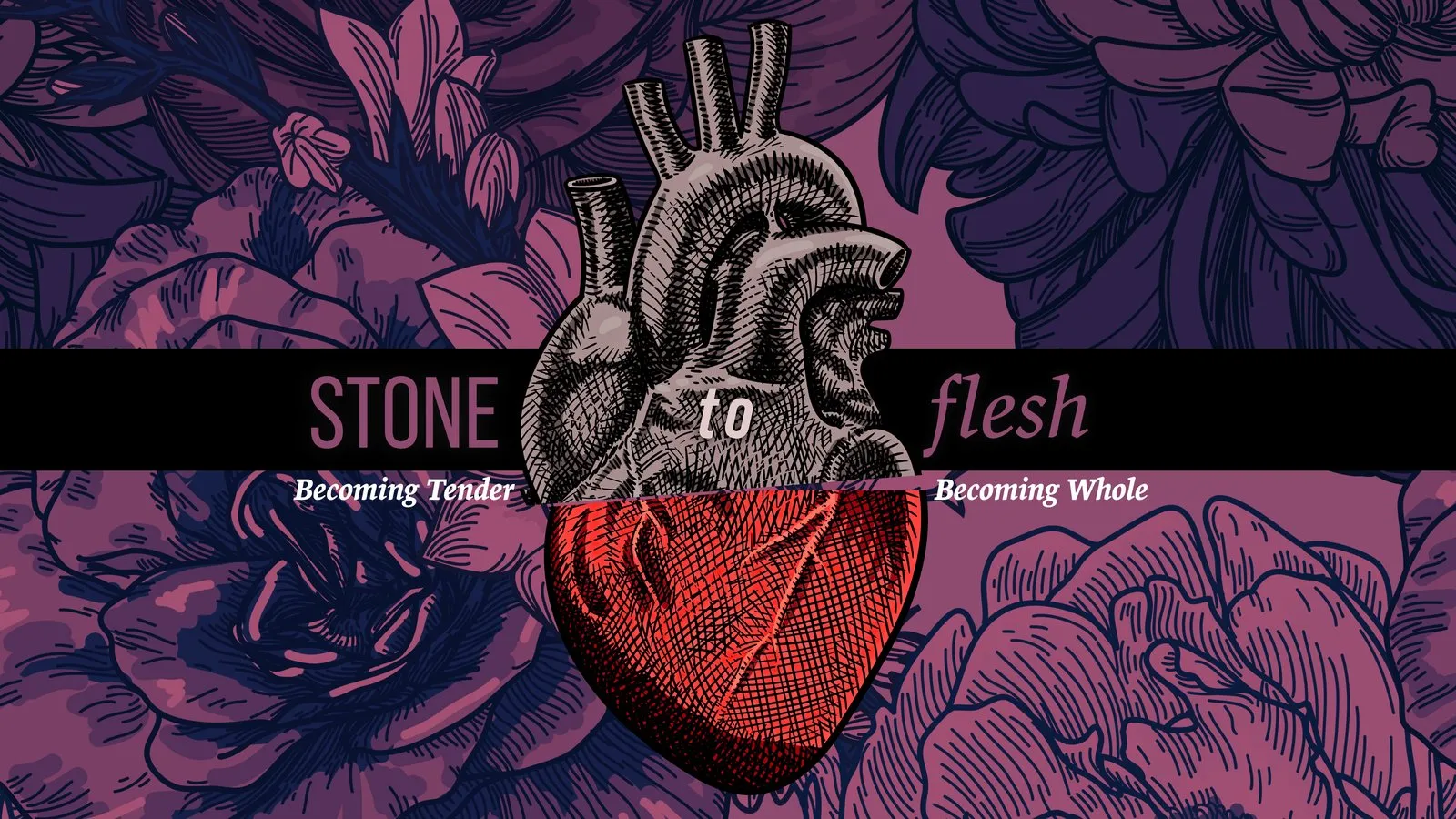
Six Sundays of Lent in the book of Jeremiah, asking what it takes for a heart that went numb to survive to become tender again.
About the series
The Table spent the first months of 2026 with Jeremiah, a prophet who told the truth to a city that wouldn’t hear it and then lived through its fall. The first half of the series, Surviving Saturday, looked for practical wisdom for the long in-between, after Friday’s loss and before Sunday’s joy. On the Sunday after Ash Wednesday, Tonetta said it was time to zoom out. Jeremiah is a book for survivors, she said, “and yet surviving is just the beginning of what we’re about.”
The title comes from Ezekiel’s version of the promise, “I will remove from your body the heart of stone and give you a heart of flesh” (Ezekiel 36:26), and the preachers heard it alongside Jeremiah’s new covenant, the law written on the heart (Jeremiah 31:33). They kept coming back to Kathleen O’Connor, who reads Jeremiah through the study of trauma and disaster. Disasters, she writes, “leave people stunned, isolated, and hopeless,” and one of their consequences is numbness. Grief and anger go out of reach, and without them healing can’t start. A heart turns to stone to protect itself.
So the work of these six Lenten Sundays was thawing, and Anthony warned on the second week that thawing hurts. “Flesh bruises. It feels things.”
Tonetta began with the Little Book of Comfort (Jeremiah 30–33) and The Lion King. On Homecoming Sunday Anthony set the potter’s wheel of chapter 18 beside the jug smashed in chapter 19, and told the story he had carried for 27 years about why he left his aunt and uncle’s home. A week later he followed Jeremiah’s marriage metaphor, the ugly parts included, all the way to Ephesians. Toochi made a case for grieving in public, and Trevor for buying the field anyway. The series ended on Palm Sunday with the remnant’s flight to Egypt, a parade with a donkey in it, and a crowd of 70,000 carrying candles through Leipzig.
Anthony closed where the Jeremiah series had started, in the Saturday. “Friday has its grief, and Sunday has its joy. But Saturday is just not knowing.” Easter came a week later.
6 sermons, in order
Community group guide
One week per Sunday. Listen to the sermon together or ahead of time. Start with the opening question, which works even for someone who missed the sermon, then choose the discussion questions that fit your group. Few groups get through all of them. Sharing is optional, and “pass” is a complete answer.
Week 1 · Feb 22From Hearts of Stone to Hearts of Flesh Jeremiah 31:31–34
Open
Tonetta’s first youth pastor once got a sanctuary of about 600 people to sing “Hakuna Matata.” What movie from your childhood could you still quote from memory?
Discuss
- Read Jeremiah 31:31–34, the heart of what’s called the Little Book of Comfort (Jeremiah 30–33). God promises a covenant written on hearts, where “they shall all know me, from the least of them to the greatest.” Tonetta heard in it a renewed intimacy with God and “an egalitarian distribution of power.” What do you notice?
- Tonetta, drawing on Kathleen O’Connor, named numbness as one of the ways people survive disaster: closing down because the world, or your past, or faith “has become too much.” When people go numb, O’Connor says, grief and anger go out of reach, and healing can’t begin. How would someone know they’d gone numb? What gives it away?
- Scar tells Simba, “Run away and never return,” and Simba believes him, settling for a diet of bugs because he thinks he can’t have more. Tonetta said all of us are susceptible to “believing lies about ourselves” and “living far below the dreams that God has for us.” What makes a lie like Scar’s so easy to believe?
- Lent, Tonetta said, is for “shedding whatever protective strategies we think are keeping us safe, but are actually keeping us stuck.” How can you tell the difference between a strategy that keeps you safe and one that keeps you stuck?
- Volunteers had been honored that morning, and Tonetta told them they are the leaders of this church, then wondered whether burnout and betrayal had left people unable to see themselves as shepherds, prophets and teachers. Exodus 19:6 calls the whole people “a priestly kingdom.” What gets in the way of seeing yourself that way?
- Jeremiah 31 ends with a map. “The whole valley of the dead bodies and the ashes,” all the way to the Wadi Kidron, “shall be sacred to the Lord” (31:40). Tonetta read it as every wounded place “encompassed by the love of God.” What would it mean for a place of loss to be made sacred instead of erased?
This week
Tonetta’s Lenten challenge came from Jeremiah 30:2: “Write in a book all the words that I have spoken to you.” This week, write down the vision of joy and hope you sense God calling you toward, past the numbness and the exhaustion. Then try her “yet” sentences: “I may not know how to ___ yet. But God’s intent for me is that I will.”
Close in prayer
Close with Tonetta’s blessing: that the one who made us to be kings and priests would turn our hearts of stone into hearts of flesh, and restore and make sacred all the wounded places in our lives.
Week 2 · Mar 1Fragmentation and Interpreting Survival Jeremiah 19; Jeremiah 29
Anthony tells his own story of foster care, of separation from his mother, who lived with severe mental illness, and of years of believing he was unwanted. Leaders may want to say so at the start.
Open
Anthony’s sermon was about a jug smashed on purpose. Have you ever tried to glue something back together? Did it hold?
Discuss
- Read Jeremiah 18:1–6 and 19:1–11 side by side. In one chapter the potter reworks the clay. In the next, Jeremiah smashes a finished jug “so that it can never be mended.” The Hebrew verb is שָׁבַר (shavar), shatter. Anthony said the difference between the two comes down to “the condition of the material.” What do you make of that?
- For 27 years Anthony believed an angry journal entry he wrote at nine had cost him a family. Over dinner his aunt told him, “You were the one who wanted to move out,” and that they had fought the state to keep him. “The fragments were real,” Anthony said. “The shattering was real. The interpretation was not.” What does it take to question a story you’ve told yourself for a long time?
- “Not everything happens for a reason,” Anthony said, borrowing from Kate Bowler, “and we can make meaning out of what happens.” Why does the difference between those two ideas matter to someone who is grieving?
- Jeremiah’s letter tells the exiles to build houses, plant gardens and “seek the welfare of the city” (29:7), the Hebrew שָׁלוֹם (shalom), while the prophet Hananiah promises they’ll be home soon. Anthony pointed out that the graduation-card verse, Jeremiah 29:11, sits inside a letter that says you’re not going home. How does that change the promise of “a future with hope”?
- Anthony described three places a person might be: keeping a heart tender under pressure, thawing one that has already hardened, or holding the pieces of something that has already shattered. “God is not finished with the fragments,” he said. Which place feels closest to where you are, if any?
- Paul says we have this treasure “in jars of clay” (2 Corinthians 4:7). “My goal is not to become an unbreakable vessel,” Anthony said, and he pointed to the risen Jesus, who still has nail marks in his hands. Where have you seen something real come through the cracks?
This week
Jeremiah’s letter assumes the exiles will stay long enough to eat what they grow. This week, put down one small root where you are: plant something, cook for a neighbor, or learn the name of someone on your block.
Close in prayer
Pray for anyone holding fragments right now, and for the grace to build and plant among them. Give thanks for a God who is not finished with broken pieces.
Week 3 · Mar 8The Metaphor of the Broken Family Jeremiah 2–4:4
Anthony reads Jeremiah’s sexually degrading marriage imagery aloud (2:20–24) and names its violence against women. Leaders may want to say so at the start.
Open
Anthony offered one piece of unsolicited marriage advice: do not call your spouse a wild ass. What’s the best advice about love or friendship anyone has given you?
Discuss
- Read Jeremiah 2:1–5. The passage opens as a love poem, a bride following God into the wilderness, and five verses later God asks, “What wrong did your ancestors find in me?” Anthony traced the arc from that bride to a woman screaming in 4:31. What strikes you about God asking that question?
- Kathleen O’Connor sees two things at once in these chapters. Jeremiah knows women’s pain intimately and uses it to tell the truth about national collapse, and he also blames women for a fall that priests, rulers and prophets brought about (2:8). How do you read a text that does both?
- Anthony described the God of Jeremiah 2–4 in family-systems terms: a pursuer who asks question after question while Israel withdraws, and the harder one pursues, the farther the other runs. Where have you seen that cycle play out?
- At the center of the passage is an invitation: “Return, faithless Israel… I will not be angry forever. Only acknowledge your guilt” (3:12). In Hebrew, “return, faithless one” is a pun on a single root, שֻׁבָה מְשֻׁבָה (shuvah meshuvah): turn back, you who turned away. “The capacity to turn away from God,” Anthony said, “is the same capacity that can turn us back to God.” Does that feel like relief, or does something in you resist it?
- In Ephesians 5:25, Christ “gave himself up” for the church, παρέδωκεν (paredoken), from παραδίδωμι (paradidomi), the verb the Gospels use for Judas handing Jesus over. In Jeremiah the cost of a broken relationship falls on the unfaithful partner, and in Ephesians it falls on the faithful one. God goes “from the one who accuses to the one who absorbs the cost.” Which picture of God has shaped you more?
- “I will take you, one from a city and two from a family, and I will bring you to Zion” (3:14). Anthony looked around the room and called it the pieces of many families: “That’s not the consolation prize. That’s the plan.” What has it meant for you to belong to a community made of pieces?
This week
Lent, Anthony said, is “the daily discipline of noticing when I have turned direction and I need to turn again.” At the end of each day this week, take a minute with two questions: Which way was I facing today? Where do I want to turn tomorrow?
Close in prayer
Pray to the God who hands themselves over in love, and ask for the grace to turn, and keep on turning.
Week 4 · Mar 15Lamentation and the Weeping God Jeremiah 8:18–9:1
Open
Toochi spent weekend after weekend in 2025 driving to New York to stay with family and get some distance from DC. When you need to get away for a while, where do you go?
Discuss
- Read Jeremiah 8:18–9:1. Some scholars hear God weeping in this poem, and others hear Jeremiah weeping on God’s behalf. Toochi drew on Kathleen O’Connor, who says Jeremiah echoes God’s inner being. What changes for you if God is the one crying?
- The poem’s last line opens with מִי־יִתֵּן (mi yitten), literally “who will give,” a Hebrew way of saying “if only”: if only my head were a pool of water and my eyes a fountain of tears. Toochi heard a wish to weep, a grief so deep the tears won’t come yet. Why do you think grief sometimes arrives without tears?
- Other prophets in Jeremiah’s day treated the people’s wound lightly, “saying, ‘Peace, peace,’ when there is no peace” (8:11), שָׁלוֹם שָׁלוֹם (shalom shalom). Where do you hear that kind of false reassurance now? What makes it tempting to offer, or to accept?
- Toochi set Chadwick Boseman’s private fight with cancer beside lamentation, a public grief that invites the whole community to mourn. Where did you learn that grief should be private? Has that served you, or cost you something?
- Jeremiah sends for the mourning women: “Teach your daughters to wail; teach one another how to lament” (9:20). Toochi named traditions that make grief communal, among them shiva, Obon, Día de los Muertos, New Orleans jazz funerals and the Māori tangi. Which do you know, and what could a church learn from them?
- A quote Lupita Nyong’o shared after Boseman’s death calls grief “a passage, not a place to stay” and “the price of love.” If that’s true, what might a community’s grief say about what it loves?
This week
Toochi called Lent a communal invitation to mourn with Jesus as he walks toward the cross, the way the women of Jerusalem wailed for him (Luke 23:27). With your group or one other person, name something you’re grieving in the city or the world, and stay with it for a few minutes without trying to fix it.
Close in prayer
Pray a lament together, using Jeremiah 8:18–9:1 if you need words. Name what’s wrong, aloud or in silence, and ask God to make hearts of stone into hearts of flesh.
Week 5 · Mar 22Embodied Anticipation of Homecoming Jeremiah 32:1–15
Open
Trevor told the room that some of them need to go to a barbecue. What do you most like to cook or eat when people gather?
Discuss
- Read Jeremiah 32:1–15. Jerusalem is under siege and Jeremiah is under arrest when his cousin Hanamel asks him to buy the family field at Anathoth. Jeremiah weighs out seventeen shekels of silver, signs and seals the deed in front of witnesses, and has Baruch put both copies in a clay jar “in order that they may last for a long time.” Why do you think he’s so careful about the details?
- Trevor quoted Eugene Peterson on acts of hope: “rarely spectacular,” usually “outside of sacred settings,” almost never seen as significant. What small acts of hope have you seen that fit that description?
- Trevor opened with Ward Abu Ali’s grandfather in Jordan, telling stories on Friday nights about his home in Nablus, and with the keys Palestinian families have kept since the 1948 Nakba. Later he described kids in Gaza breakdancing in the rubble. What do those images tell you about hope?
- Trevor said you can be faithfully seeking God while your own country drops bombs and starves the vulnerable, or while the church where you first met Jesus calls you hellbound. Exile falls on the faithful too. How do you hold onto hope without pretending that weight isn’t there?
- Bobby Seale, co-founder of the Black Panther Party, said, “I believe a revolutionary can go fishing in the morning, cook a meal, write poetry in the afternoon, work for the community at night.” He cooked barbecue for thousands. Why might food, art and parties belong to the work of resistance?
- Trevor’s field at Anathoth was a laminated poster in a high school locker, made by an older brother, that promised a state wrestling title while teammates were telling Trevor to quit. What is your field at Anathoth, the thing that looks impractical but feels like your next act of faith?
This week
God’s promise in Jeremiah 32:15 is ordinary: “Houses and fields and vineyards shall again be bought in this land.” Trevor filled those words with birthday parties, soccer games and long conversations. This week, buy your field: take one concrete step toward the thing you named, or host something small, a meal or a barbecue.
Close in prayer
Pray for people living in exile or under siege, near and far, for Palestinian families still holding the keys to homes they were driven from, and for the stubborn hope to buy the field anyway.
Week 6 · Mar 29Uncertain Endings and the Triumphal Entry Jeremiah 42; Jeremiah 43; Psalm 118:1–2; Psalm 118:19–29; Matthew 21:1–11
Open
On Palm Sunday Anthony asked the kids in the room whether their parents had ever told them no, and whether they’d done it anyway. What’s something you did as a kid after being told not to?
Discuss
- Read Jeremiah 42:7–12. After Jerusalem falls, the people left behind ask Jeremiah for God’s word and promise to obey it. God says stay: “I will build you up and not pull you down; I will plant you, and not pluck you up” (42:10). They go to Egypt anyway. “Sometimes the chains that are familiar,” Anthony said, “feel safer than the freedom that’s unfamiliar.” Why is the familiar cage so appealing?
- Anthony traced the palm branches back to the Maccabees, whose revolt against the Greek empire ended with palms waved at the temple’s rededication (2 Maccabees 10:7), the event Hanukkah remembers. What kind of king would a crowd waving palms have expected?
- Anthony laid out three responses to empire and showed them in a clip from Moana: the villagers hide on their island, Maui fights Te Kā, and Moana walks toward the monster with something else. Retreat to Egypt, fight like the Maccabees, or ride the donkey. Which do you reach for first?
- Anthony pictured two processions entering Jerusalem for Passover: Pilate on a war horse with his soldiers, Jesus on a donkey. “Hosanna” comes from Psalm 118:25, הוֹשִׁיעָה נָּא (hoshia na), “save us, please.” Anthony preached the day after people from the Table joined the No Kings protests, and he called the crowd’s shout “a desperate, public, and illegal prayer.” What changes when you hear Palm Sunday as a protest?
- In Leipzig, Monday prayers for peace at St. Nicholas Church went on for seven years with almost no one noticing. On October 9, 1989, the crowd walked out into 70,000 people holding candles. Pastor Christian Führer said it takes two hands to carry a candle, one to hold it and one to shield the flame, so you can’t throw a stone. What would a discipline like the candle look like for you?
- The Palm Sunday crowd joined the parade before they knew how the week would end. “That’s what trust looks like,” Anthony said. “Not certainty, but movement.” He said we all live in the Saturday, between the world as it is and the world God promises. What does it look like to keep marching there?
This week
Anthony’s best picture of Palm Sunday was a Pride parade, people showing up in the street as fully themselves after the world told them to hide. This Holy Week, choose one public act of nonviolent hope, and do it with joy.
Close in prayer
Pray Psalm 118, the parade song of someone pushed hard and still standing: “I shall not die, but I shall live, and recount the deeds of the Lord” (118:17). Ask for the courage to keep walking through Saturday.
Go deeper
- The Lion King · Walt Disney Feature AnimationFilm, 1994 · week 1
- Everything Happens for a Reason: And Other Lies I’ve Loved · Kate BowlerWeek 2
- Black Panther · Ryan Coogler, directorFilm · week 4
- Barbeque’n with Bobby · Bobby SealeCookbook, 1988 · week 5
- Moana · Walt Disney Animation StudiosFilm · week 6
- The Lord of the Rings · Peter Jackson, directorFilms · week 6