Feelings Aren't the Enemy: Honoring Your Emotions as Self-Care
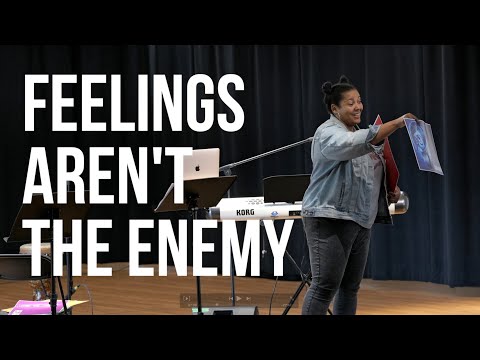
In a culture that often tells us to suppress our emotions, what if they're actually trying to tell us something important? In this refreshingly honest conversation, Shae Washington unpacks how our emotions—even the uncomfortable ones—serve a purpose in our lives. Drawing inspiration from Pixar's "Inside Out" and challenging the messaging many of us received growing up ("boys don't cry," "happiness is a choice"), this talk offers practical wisdom for recognizing what your feelings might be signaling about your needs. Whether you've been told anxiety means you lack faith or that sadness should be overcome quickly, this episode provides a framework for treating your emotional life with respect rather than suspicion. Plus, stick around for an adorably instructive "feelings fashion show" from the kids that perfectly demonstrates why children might be our best teachers when it comes to emotional honesty.
More detail
Chapters8 sections
TranscriptAuto-generated · 4,545 words
Generated automatically from the audio, so names and some words may be wrong. Tap any sentence to hear it.
All Together Sunday and what honor means
I hear all of the riveting conversations. Happy All Together Sunday. Is this great or what? Can we have, first of all, Audrey up here singing every week. We are so excited to have our young people in the service with us today. If you are like zero to 14 years old, can you wave or like jump up and down or hold the babies up or something just so we can celebrate you?
Yay. Hello to all of our little kids, to all of our big kids, to all of our kids at heart, which I consider myself. I'm so glad that we get to be in the service today. My name is Shae Washington. I use she, her pronouns. I'm an elder here at The Table, which is part of our leadership team. And today I'm going to give a message on our emotions and our feelings. We are in the fifth week of our Lenten series, which is entitled Sacred Self-Care.
And so today we're going to be exploring how honoring our emotions is part of self-care. Now, our service is going to be a little bit interactive today. I'm hoping that y'all will help me preach it. In just a little while, I think Pastor Anthony is going to be in the audience, probably holding this mic so that you can help me answer some questions. But I will start us off.
So my first question is just, does anyone have a good way to define or describe what it means to honor something? To honor something. Yes, Audrey, I see you. Okay, I love that. Okay, so one way to honor something, that means we listen to it. So we listen to the person or the thing. I love that. What else? Any other ways to describe what honor means? Maybe to respect something or appreciate it. Yes. Love that. Okay. So we got listen to, respect, appreciate, anything else? Also like just treat as
special. Oh, yes. I was gonna say protect and stand up for. Oh, I love that. Okay. So protect. So we got listen to, treat with respect and protect. Yes. I love that. Okay. Listen to, treat with respect and protect. So we are talking about how we do just those things when it comes to our emotions and our feelings and how all of that helps connect us to God.
Inside Out and our core emotions
So to kick us off, we're going to take a look at a short clip from the movie Inside Out. Has anyone seen Inside Out? Yes. It's an amazing film. There are two of them. We're going to take a look at a short clip from the first one. And it's the very, very beginning of the movie. Okay. Okay, y'all. So... First of all, if you haven't seen the whole movie, I highly recommend. Um, in that clip from
Inside Out, we see a baby named Riley growing up, and we see the the emotions inside of her that she was experiencing as she went through different moments in life. So what emotions or other characters did we just meet in the movie? Anybody remember? Yes. Discuss. Yes, and I have some pictures that help us remember. So, discuss. Okay. Who else did we meet? Happiness. Yes, we met joy or happiness. Who else? Yes, right back there.
We didn't meet anxiety this time, but anxiety is in movie two. Yes. Yes. Fear. Yes. We met fear. Very cautious about things. Yes. And try. We met sadness. And then last one. Yeah. Yes. We met anger. Big feelings, y'all. So inside of us, we have all of these emotions. We've got happiness or joy. We've got disgust. We've got sadness, fear, anger. And there's one other uh kind of basic set of emotions. Does anyone know what it is? Yes. Anxiety. Not, yes, but maybe no. What if I went like this?
Surprise. Yes. So this is our, what people, some people say is our core set or like kind of universal emotions. And that we then have a bunch of different feelings connected to these emotions. And just like Joy told us in the movie clip that we watched, each of our emotions serve a purpose. They guide us, they keep us safe, and they give our minds and our bodies really important information on how to react, right?
So, like, when Riley was getting ready to try broccoli, disgust took over, right? And made her reject trying it at first, just in case it was going to be bad for her. Now here's a really important question. Who here doesn't like broccoli? Anybody? Okay, just a couple. Okay, so everybody else? You like broccoli? Okay, I love broccoli and I was so glad that Riley tried it because in addition to being yummy, in my opinion, it's also so good for us.
Now, there was one emotion that Joy said she didn't understand why it was there. She felt like maybe it could go someplace different, but she said she checked and it wasn't going anywhere. Does anyone remember what emotion that was?
Yes. Sadness. Sadness.
Yeah, it was sadness, but just like all of the other emotions, sadness is important, right? And just like we honor, right, listen to, respect, protect, treat us special, just like we honor joy and fear and disgust and surprise and anger, I think we should also honor sadness.
Reading John 11 and why Jesus cried
So, y'all, we're going to take a look at a story in the Bible, and I'm going to read from this really cool storybook Bible. It's called the Peace Table Bible, where we see Jesus doing just that, like honoring sadness, okay? So, this story, so this is the Peace Table Bible.
It's really cool. And this is the story and the photo that go with this story. And this comes from John chapter 11, verses 1 through 44.
So it says, Winter came, and Jesus went to Jerusalem for the festival of the dedication. Some of the leaders there tried to arrest him. He escaped with his disciples and went to a small town across the Jordan River.
A message came from his friends, Mary and Martha, who lived in Bethany. Their brother, Lazarus, was very sick. Could Jesus come and help?
Jesus loved them very much, yet he waited two more days before going to their home. And by that time, Lazarus had been dead for four days. So Martha and Mary's friends came over to comfort them.
And when Martha heard that Jesus was coming, she hurried out to meet him. And she said, if you had come sooner, my brother would not have died. But even still, I know that God will give you whatever you ask.
And Jesus said, Lazarus will live again. I am the resurrection and the life, and anyone who believes in me will never die. Do you believe this?
Martha said, I believe that you are the Messiah, the Son of God, the one who has come to save us. So, Martha went back home and told Mary, the teacher is calling for you. So then Mary ran out to greet Jesus, and her friends followed.
And she knelt down at his feet, weeping. She was crying so hard. And through her tears, she said, if you had been here, my brother would not have died.
And Jesus saw her tears and was deeply moved, and he began to cry too. Now, if we have that mic, I'm wondering in the audience, I'm wondering, first of all, just raising your hands. Has anyone here ever felt sad?
If you want to raise your hand. Okay. Have you ever been so sad that you cried?
Me too. And Jesus too, right? But Jesus is feeling some big feelings, and he cries.
So what do you all think made Jesus cry? Why was Jesus sad? Can we get, yeah.
Because. Why do you think? I didn't see her die.
His friend died. Because his friend died? Yeah, that could definitely be one reason.
Any other reasons? Yes. Can we have, oh, yes, perfect. I think it was because he wasn't there to save him. Like he got there too late. Yeah, that could be a reason too. Yes. I think it's because his
friends were sad and that made him sad too. Yeah, those are all good reasons to be really sad and to cry. And what did Jesus do? He honored this emotion by letting himself feel it as he cried with his friend Mary.
Messages that taught us to hide feelings
So let's think back to the movie for a second, the Inside Out movie. If you watch the whole movie, you're going to see Joy working really hard to make sure none of Riley's other emotions get expressed very much, especially not sadness. Joy wants Riley to keep feeling happy and good. But y'all, as I told my mom when I was a kid, with all of the drama, I was able to so easily and earnestly muster. God gave us all these emotions and we should be able to feel them all.
Because my mom was kind of like Joy from Inside Out. She really wanted me and my sister and my brother to just be happy and feel good all the time because she loved us and she didn't want us to feel bad. But sometimes we did feel bad or mad or sad. And it didn't feel good either acting like we didn't feel those things. So for my bigger kids and my kids at heart, depending on how we grew up and the messages we got about our emotions, there's a whole host of things that we sometimes believe or at least at one time believed that can work against us honoring our emotions. Right? Treating
them as special, protecting them, listening to them. Can anyone share some examples that either you heard, you believed at one time, things that you know work against us, honoring our emotions? Any ideas? It was commonly taught that boys don't cry. Yes, boys don't cry. That's a big one. What else? Things that we heard that weren't true, but we believe sometimes. All right. Anybody else? Kids at heart? Big kids? Yes. I'm not sure how I feel about it. My mom often says happiness is a choice. Happiness is a choice. That's an interesting one. Okay. I was the middle of seven kids, so I
didn't really get the chance to, like, express myself very much, and I was a good kid, so it was kind of, like, don't express yourself or didn't know how, like, to do that. Yes. Yeah, so certainly that's a message to kind of, like, kind of keep it inside, don't be noticed.
Yeah. That certain emotions are bad or negative. Mm-hmm.
Anyone specific come to mind? Any specific emotions come to mind that would be, like, bad or anger? Yeah, that was a big one for me.
I think when people tell you, like, you're fine or to get over it and move on and not, you know, just being really dismissive of what you're feeling. Yeah, for sure. Anyone else?
I also heard, like, only, like, crying is only for babies. Yeah. I was going to say, I feel like a message I got a lot from my mom, who means very well.
Of course. Love her to pieces. Is like is Is like, you know, to take to take things really hard and like, you know, to instead of letting things roll off your back to like, you know, take take what? Yeah. Like to lean into feelings of like insult or hurt. Okay. Like when I probably should have let it roll off my back. Okay. So almost the opposite. It's kind of the opposite. Yeah. So like really feel it if you're
going to feel it. Okay. Got it. Being called a crybaby growing up like made me feel ashamed of crying, especially in front of others. Yeah. Thanks for sharing that. Don't show emotions in public. They're just for private. Oh yeah. That's a big one. That's a big one. I think we feel like we're out of control. Like, you know, the heart has a mind of its own. I think it bothers us. There's something going on with us that we don't seem to be able to rationalize or control. Right. That loss of control, it feels uncomfortable and it feels like maybe we should just try to like
move on or something like that. Okay. I'll give you something to cry about. I'll give you something to cry about. Or if you don't stop crying, I'll give you something to cry about. Yes. One I had It was like anxiety is a lack of faith. Yes, yeah, that's a big one.
Anxiety is a lack of faith, or if we're scared, we're not really trusting God, or thinking and logic is better than feeling, all of those. Thank y'all so much. Y'all are preaching this morning, okay?
Our God is an emotional God
Here's the thing, though. If those things were true, I don't think that we would have so many examples in the Bible of God actually expressing their emotions, right? Because in the Bible, there are times, and y'all, there are slides for these, so feel free to check it out now or later.
In the Bible, there are times when we see things like God's joy and delight, right? Zephaniah 3:17, for the Lord your God is living among you. He is a mighty Savior, will delight in you with gladness, with God's love.
God will calm all your fears, and he will rejoice over you with joyful song. We see God's compassion and care in Matthew 14:14, where it says Jesus went forth and saw a great multitude and was moved with compassion toward them and healed their sick. And we even see God's anger.
There's a whole other story on the next page in this Bible called Let the Little Children Come. It's a really beautiful photo, if everyone can see it. And this is about when Jesus and his disciples are out into the region of Judea, and the crowds are coming and following Jesus, and people begin bringing children to Jesus so that he could bless
them. But the disciples are the ones that are saying, go away, stop bothering Jesus. And when Jesus heard the disciples' mean words, it says he felt very angry. And he called to them with a loud voice, let the little children come to me. Do not ever stop them. God's kingdom belongs to those who are like these children. And these are just a few of the emotions we see God experiencing and expressing in the Bible. Y'all, our God is an emotional God, and we are made in God's image, which means we are emotional beings, and our emotions are one way that we can connect to God,
connect to ourselves, and connect to each other, and that is a very good news. Now, in the story about Lazarus, when Jesus sees what has happened and how upset his friends Mary and Martha are about their brother Lazarus dying, Jesus doesn't rush in going, it's fine, it's fine, don't be sad, I can fix it. I can make it better. No need to be upset, even though he knows he could, right? We know later in the story that Jesus brings Lazarus back to life. But in the moment, he sees their sadness. He lets it impact his heart. He allows himself to feel his own pain, and he cries
with them. He shows honor to his emotions, and he cares for himself and his friends in doing so.
Slowing down to name what we need
So the question is, what if we gave this gift to each other? In Romans 12:15, it says, be happy with those who are happy and weep with those who are weak. So what if we honored, listened to, showed respect, protected, treated as special, our emotions by letting ourselves and each other feel them?
What would it look like to just be with our joy, our sadness, our fear, even our anger, or any of our emotions when they come up, instead of denying them, pushing them down, or glossing over how we really feel? And what if we didn't rush in and try to fix everything right away for someone that we loved?
Even harder, what if we let our emotions connect us more deeply to God and to each other instead of disconnecting? And that's kind of where our head and our hearts come together with our bodies to help us express our emotions in ways that don't hurt ourselves or others, right? Because just because we're angry doesn't mean that we have to call each other names or hurt someone or ignore them and pretend like they don't exist.
But part of what this takes, though, is slowing down and being able to recognize what we're feeling and what that might mean for what we need in the moment. Because sometimes, though, we're so busy and life is moving so fast, we might be able to tell like we're feeling a little bit off, something feels like not ourselves. But life is moving so fast, we don't actually stop and say, hmm, what is going on with me?
How am I actually feeling? What do I need right now? Instead, just like Joy, how she takes over in Inside Out, sometimes we decide we just want to go outside and play. Or we just want to hang with our friends, or we just want to plan that next big trip, right?
Something that just feels better. All the while, our insides are actually trying to tell us something, and we're missing it. So for all my big kids and kids at heart in the room, there's a fantastic webpage called Neurodivergent Insights by Dr. Megan Anna Neff.
And it gives some really great information on our emotions, including what each core emotion is often trying to tell us about an underlying need. So I encourage you to check it out. One thing that she says is, without emotion, we would likely lack the motivation to address unmet needs.
For instance, fear acts as a mobilizer, a way to get us moving and taking action, compelling us to seek safety, while anger propels us towards justice, working to change something that isn't fair or right, and that sadness may draw us towards connection to fulfill our underlying connection needs, like being part of a community and feeling like we belong. In it, she goes through sort of like what those underlying needs are.
So please check it out. And when I'm saying need, I mean like maybe we need a hug. Maybe we need some time by ourselves.
Maybe we need to eat. You know, like there's so many different needs that we have. And so it's important to be able to recognize them and name what we're feeling, because this helps us get our needs met, and it helps us meet the needs of others,
and that is one way that we take care of ourselves and take care of each other. Slowing down to honor our emotions might look like taking a deep breath. Can we do that right now?
Just let our bellies fill with air and then blow it out. One more time. Breathe in.
Blow it out. Yeah. So that could be one way, a good belly breath.
Sesame Street has a fantastic song by Common and Colbie Caillat, Google it, called Belly Breathing. It might look like counting to 10. It might look like journaling or drawing what we might be feeling inside.
Anything that helps us slow down and recognize and name what we're feeling. Last big thing, kid thing, is there's a book called Atlas of the Heart by a researcher named Brené Brown, and she maps 87 emotions and experiences. When she first started collecting this data, she surveyed 7,000 people over the course of five years, and she asked them to list all of the emotions that they could recognize and name
as they were experiencing them. Does anyone know the average number of emotions people were able to name, like the number? Yeah. Someone said 10. Someone said 5. Y'all, it was 3. 3. Sad, mad, happy. Yeah. And there are so many more than that, though, right? And so that's one way that we help ourselves by growing the words
that we have to communicate what we're feeling, by helping our little ones grow their words to express to us what they need and what they're feeling. There's an amazing resource called the feelings wheel. Recommend that. I like to carry it around with me. And Brené says language is our portal to meaning making, connection, healing. We got a preacher down there. Learning and self awareness. She says without accurate language we struggle to get the help we need and we don't always regulate or manage our emotions and experiences in a way that allows us to move
through them productively, and our self-awareness is diminished. And many of the great theologians talk very specifically about how knowing ourselves well is intertwined with knowing God well.
A feelings fashion show
So it's super important. And kids, guess what? You are oftentimes our best teachers at helping us recognize and make space for our emotions because of the courageous ways you express them. Adults, I know this can provide us with a challenge sometimes. We can have lots of emotions, right, about all of the emotions our little ones are feeling and expressing, but we can also make space to honor those for ourselves. Okay, so do that. But because our kids are often the best teachers of expressing emotion, and because we can all stand to grow our ability to be able to
notice our emotion and recognize our feelings, I have a treat for you today. That's a cue for our kiddos. I have a treat for y'all today. You guys, we are about to have a feeling fashion show. Get excited. Get excited. Our very own Inside Out cast of characters today from Table Kids are going to put on a feelings fashion show to help us get more connected to our range of feelings and emotions. So each of them has chosen an emotion to it to display. Each of them has chosen an emotion to display, and they're going to give us a real life example of what a feeling might look like or sound
like to help us remember the next time we might be going through something similar. So I'm going to introduce them one by one as they walk the runway. They're going to come right down here. They're going to strike a feelings pose. Some of them have a sound that they might say. Please say that back to them. Clap wildly and then the next person is going to come. Okay so they're going to take their places. We're going to cut on some music. I'm going to move this stuff. Okay.
Our first person is Andretta. Andretta is 10 years old and Andretta is annoying. Come on down, annoying. Look at those facial expressions. Okay. Next, we've got Tayo and Lola. Tayo is seven years old, Lola is two years old and y'all, they are hungry. Yes, you're smiling about it. Yes, fantastic. Yes, so hungry. All right, thank you, Tayo and Lola. You guys can work down there. We know how important it is to recognize hungry because if we don't, some of us get hangry. All right, next we got Audrey. Audrey is nine, walking down
and very offended. Let us see that. How dare you! Thank you, Audrey. Next is Jack. Check out Jack. Jack is 10 years old. Lots going on here, and it's because Jack is confused. Okay, where am I? Next we've got Noe. Noe is 10 years old and Noe is shy today. Head is kind of down, couldn't even stop, okay? So shy. So shy. Next we have Zaza. Come on down Zaza. Zaza is 5 years And sad, even though smiling, but tears coming back.
Next, we've got Alma, three years old. And Alma is giving us a treat today because many feelings. Rainbow Princess, looking a little sad.
Thank you so much. And next, we've got Sina and Alyssa, seven years old and three years old. And they are feeling silly today.
Silly, silly, silly, silly. And we've got Nia. Nia is seven years old.
Seven years old and disgusting. Yes, give it up for Nia, everybody. Miss Erin, you might have to help me.
We've got a couple more back there. Okay. We've got some kids.
Don't forget, y'all, give it up. Give it up. Thank you, guys.
Come on right down here. Come on right down here, guys. Thank you so much.
Take your time. Be careful. Be careful.
So the next time we're feeling hungry, disgust, shy, we're feeling a princess rainbow situation, all the feelings because we feel things that more than one thing at a time. Did you want to do it? Which one did you do? You did it? Oh, sadness. Okay. RJ did Sadness. Okay. Thank you so much, Table Kids. Y'all are amazing.
Wrapping up and closing prayer
So y'all, just to wrap. Honoring our emotions is just one way that we can care for ourselves and each other. It's a really important way of taking care of ourselves. As we saw from our Table Kids, we can each have very unique ways of feeling and expressing what we feel. It's also important to remember that for some of us, it can be harder to recognize what we're feeling and certainly what others are feeling. And that's okay too, right? Because we can all find ways to kind of
practice and recognize naming our emotions and being thoughtful about what they might be trying to tell us. But the amazing thing is this, our emotions are one of the ways that God made us like God's self. And so as we lean more into honoring our emotions, we lean into understanding who God is more and who God has created us to be. Thanks be to God. Would you all pray with me?
Big, feeling, amazing God. Thank you for making each of us like you. Thank you for giving us a whole host of ways to connect with who you are. Would you help us to make space to honor our feelings,
the ones that feel good and the ones that don't feel so good, and to have the courage to lift them up, to listen to them, to help express what we need to the people that we care about and trust. And would you give us the wisdom to be able to be with each other in our big feelings and our small feelings and in all of our feelings, that we could honor each other well
and lean into love more so as we do. We love you, Jesus. Amen.